
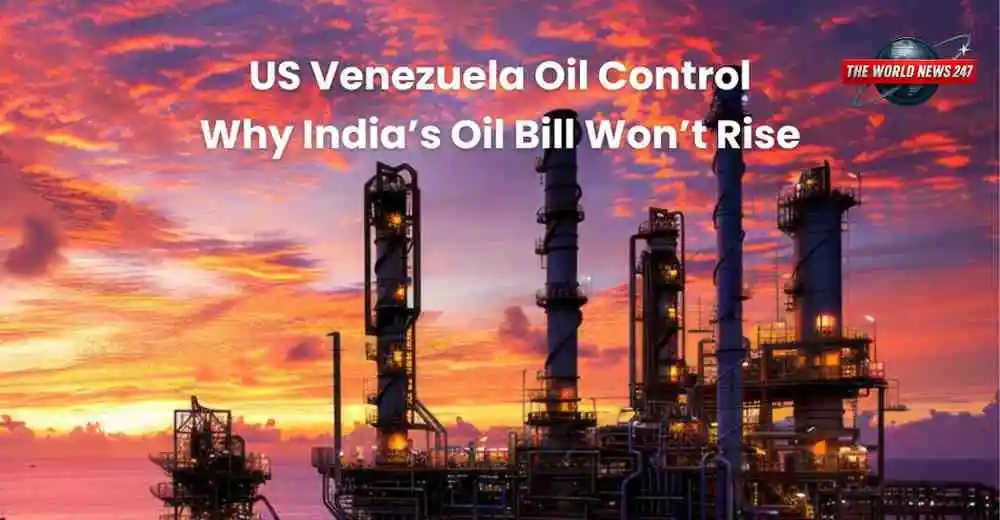
The US Venezuela oil control narrative returned to headlines after former US President Donald Trump claimed the United States could “run” Venezuela and tap its vast crude reserves. The statement triggered debate across global energy markets. However, experts say such claims will not significantly affect India’s oil bill in the near or medium term.
Why Venezuela’s Oil Is Hard to Access
Venezuela holds one of the world’s largest crude reserves. Yet most of its oil remains difficult to extract and refine. Years of underinvestment, sanctions, and mismanagement have weakened production capacity. Even if the US increases its influence, oil output will not rise quickly.
Heavy Venezuelan crude also needs specialized refineries. Many global refiners lack this capability. These factors limit how much oil can reach international markets.
India’s Oil Strategy Reduces Risk
India does not depend on a single supplier. It imports crude from the Middle East, Russia, Africa, and Latin America. This diversification protects India from sudden geopolitical shocks.
Indian refiners also buy oil based on price and quality. If Venezuelan crude enters the market, it will compete with other grades. This competition keeps prices balanced rather than inflated.
As a result, the US Venezuela oil control debate has limited direct impact on India’s energy costs.
Lessons From Past US-Led Regime Changes
History shows that US-backed regime changes often create instability. Iraq and Libya offer clear examples. In both cases, oil production faced long disruptions instead of quick gains.
Political uncertainty delays investment. Infrastructure damage slows output. These patterns suggest Venezuela would face similar challenges if foreign control increases.
Markets already price in these risks. That reduces the shock value of political statements.
Global Oil Prices Depend on Bigger Forces
Oil prices respond more to global demand, OPEC decisions, and economic growth. China’s consumption trends and interest rate policies matter more than single-country claims.
Even if Venezuelan oil flows increase, OPEC and its allies can adjust supply. This balance limits sharp price drops or spikes.
For India, this means stable pricing despite bold geopolitical statements.
What This Means for India
The US Venezuela oil control narrative sounds dramatic, but reality tells a calmer story. Structural limits, market forces, and India’s diversified sourcing reduce the risk. India’s oil bill depends more on global demand cycles than political rhetoric.
In short, headlines may change, but India’s energy strategy keeps the impact minimal.
this is a Offer-page