
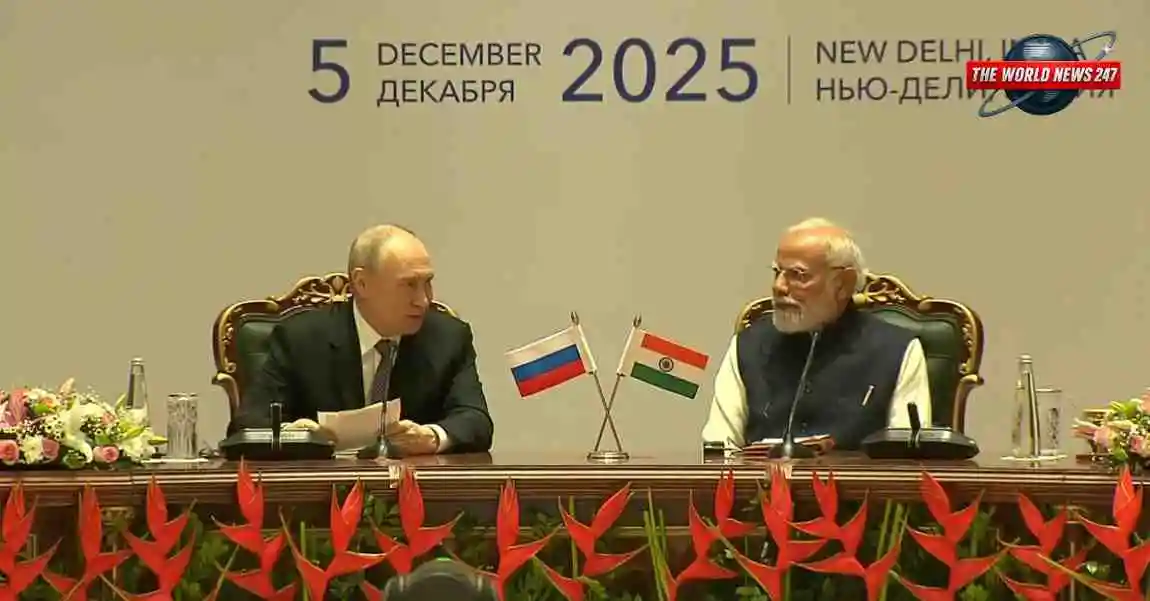
India Russia Vision 2030 Strengthens Strategic Alignment
India Russia Vision 2030 took center stage as Prime Minister Narendra Modi and President Vladimir Putin met in New Delhi for the Annual Summit. Their talks focused on a clearer and stronger roadmap for the future. Both leaders highlighted the need for deeper cooperation in trade, energy, defence and new technology. The meeting came at a crucial moment when global shifts demand stable and trusted partnerships.
Trade Roadmap Targets $100 Billion by 2030
Under the India Russia Vision 2030 plan, both countries aim to expand trade to USD 100 billion by the end of the decade. The roadmap places equal focus on boosting Indian exports, supporting joint manufacturing, and improving labour mobility. They also agreed to push for a Free Trade Agreement with the Eurasian Economic Union, which can speed up trade growth and reduce barriers.
Energy Security and Transport Connectivity in Focus
Energy forms a core part of the India–Russia partnership. Russia confirmed that it will ensure stable fuel supplies for India. Both sides also reviewed progress on nuclear energy cooperation and work at India’s largest nuclear power project.

Connectivity projects also advanced, including the North–South Transport Corridor, which aims to offer faster access between India, Russia and Europe.
Defence, Innovation and Counter-Terror Cooperation
Defence ties grew stronger as leaders discussed joint production projects, space collaboration and new opportunities in artificial intelligence. They also stressed the importance of working together against terrorism. Both countries expressed support for quick action against threats that harm security on a global scale.
Diplomacy and Global Cooperation
India repeated its position on the Russia–Ukraine conflict, calling for peace and dialogue. Russia shared updates on its proposals and expressed interest in a peaceful settlement.
The summit closed with a commitment to work closely at BRICS, SCO, the UN and the G20. With India Russia Vision 2030 in motion, both countries now aim to shape a more balanced global order.
I enjoy the efforts you have put in this, thankyou for all the great blog posts.