The Core 5 Concept: A New Power Bloc in the Making
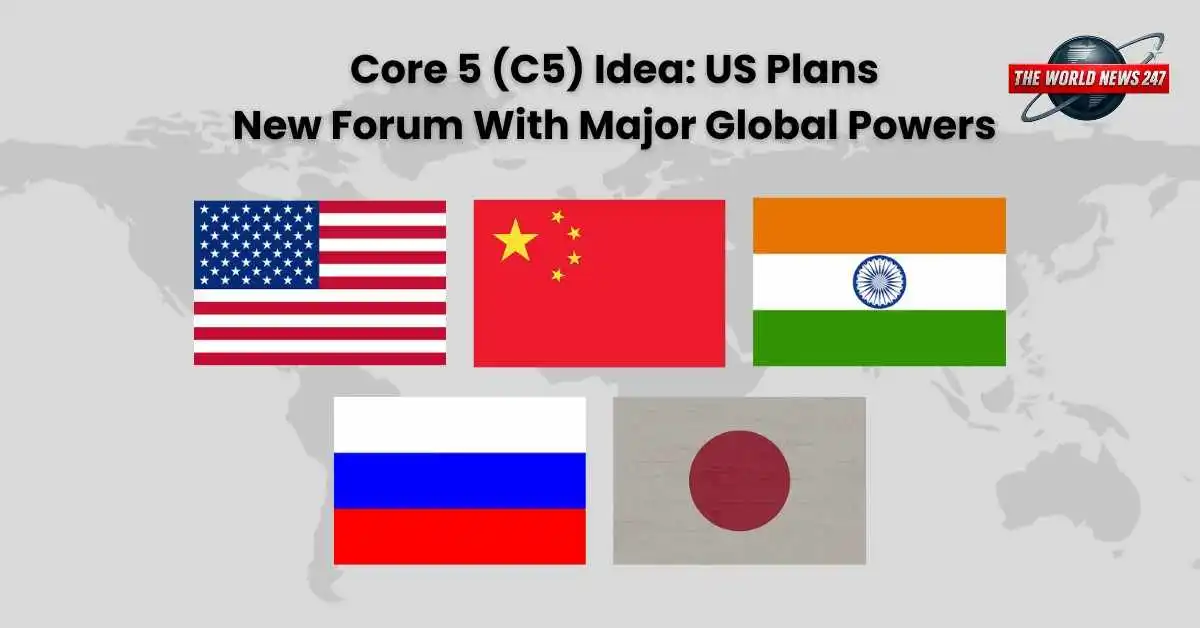
Talks inside Washington’s strategic circles hint at a bold proposal: a Core 5 or C5 forum that brings together the US, China, India, Russia, and Japan. This idea appears in a draft version of America’s evolving security strategy. Analysts see it as a move that breaks the familiar G7 mould and pushes the US toward direct engagement with the world’s largest and most influential nations. Each of these countries holds massive populations, strong economies, and decisive military and political influence.
The proposed C5 model aims for regular meetings and issue-based cooperation. The first summit may focus on Middle East stability, including diplomatic pathways between Israel and Saudi Arabia. The plan highlights Washington’s push for a more flexible and transactional style of diplomacy. Instead of relying only on ideology-based coalitions, the US seems focused on building practical partnerships that can shape global events fast and independently.
Why the US Wants a Core 5 Format
Strategists say the C5 proposal reflects a major shift in US foreign policy. The US wants to diversify its partnerships and reduce reliance on old frameworks centered on Europe. In this view, engaging major non-Western powers becomes essential. China and India dominate Asia’s strategic landscape. Russia remains a critical security actor. Japan is both a close ally and a major Indo-Pacific force.

By working with these nations directly, the US hopes to address regional issues with faster results. This approach also recognizes that power is spreading beyond traditional Western alliances. The world now runs on multipolar dynamics, and Washington wants to stay ahead of those changes.
A Potential Redefinition of Global Diplomacy
Experts say the C5 idea fits a broader trend in US strategy: shifting from sweeping ideological goals to targeted diplomatic deals. This method gives Washington more room to negotiate with countries that do not always align with US values but still hold critical influence. If the C5 forum becomes reality, it could reshape global diplomacy and create a new platform where rival powers talk directly rather than through slower institutional channels.
While the idea feels bold, analysts insist it is not unrealistic. The world’s strategic map is already changing. The C5 could become a natural step in that transition.