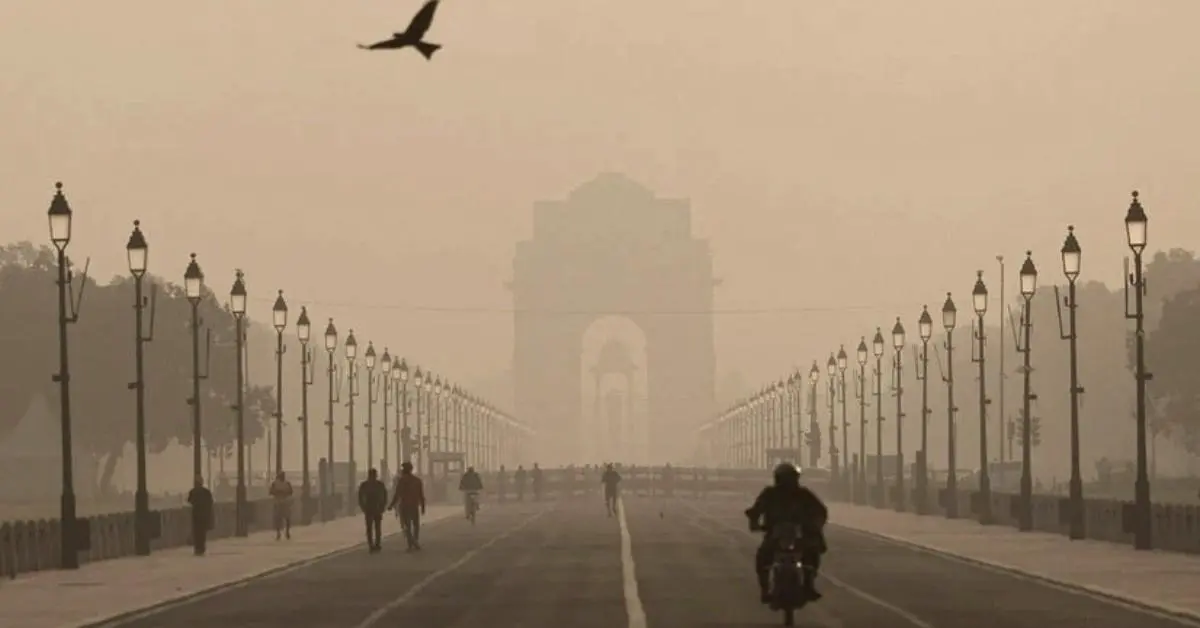
Delhi air quality severe levels have once again raised concerns as pollution grips the city. On November 9, 2025, the national capital’s Air Quality Index (AQI) entered the ‘severe’ category, recording 391 at 7 a.m., according to the Central Pollution Control Board (CPCB). Many parts of Delhi, including Anand Vihar, Alipur, and Bawana, reported AQI above 400. The worsening situation highlights an urgent need for stronger pollution control measures and public awareness.
Delhi Air Quality Severe: City Chokes Under Hazardous Conditions
Delhi’s air has turned toxic yet again. On Sunday morning, the city’s overall AQI reached 391, marking a sharp rise from previous days. Anand Vihar recorded an AQI of 412, Alipur 415, and Bawana the highest at 436. Other areas like Chandni Chowk, RK Puram, and Patparganj also crossed 400, entering the ‘severe’ zone. These figures reveal how fast the Delhi air quality severe crisis is spreading across neighborhoods.
The rise in pollution has become a seasonal pattern for the capital. As winter begins, stagnant air traps pollutants, making the situation worse for residents. Experts say the current levels can cause serious health problems, even for healthy individuals.
Understanding the ‘Severe’ Air Quality Index
The Air Quality Index measures air pollution and its impact on health. An AQI between 0 and 50 is considered ‘good’. A reading above 400 falls into the ‘severe’ category. At this stage, the air becomes dangerous to breathe. Prolonged exposure can lead to coughing, eye irritation, headaches, and lung damage.
The Delhi air quality severe category is not just a statistic—it signals a health emergency. People with asthma, children, and the elderly face the highest risks.

Why Delhi’s Pollution Spiked After Diwali
The sharp increase in pollution followed the Diwali festival. Despite restrictions, many areas witnessed firecracker use. These crackers release harmful particles like PM2.5 and PM10, which remain suspended in the air for days. Vehicle emissions and construction dust add to the toxic mix.
As a result, AQI levels jumped from 271 on Thursday to 391 by Sunday—a clear sign of how festival pollution impacts the environment.
Government Response and New Pollution Measures
To fight the rising pollution, the Delhi government has activated Stage II of the Graded Response Action Plan (GRAP). This includes banning diesel generators, controlling construction dust, and doubling parking fees to discourage private car use. The government also announced free LPG connections for slum dwellers. This step aims to reduce the use of wood and coal, which contribute to indoor and outdoor air pollution.
Officials are urging residents to limit outdoor activities and wear N95 masks. Schools are monitoring conditions closely and may switch to online classes if the situation worsens.
Health Risks and Precautionary Steps
Doctors warn that prolonged exposure to the current air can trigger respiratory infections, throat irritation, and heart problems. Staying indoors and using air purifiers can reduce exposure. Residents should keep doors and windows shut, avoid morning walks, and monitor AQI updates through verified sources.
The Road Ahead for Delhi’s Air Quality
The Delhi air quality severe trend may continue through winter. Meteorologists predict that calm winds and low temperatures will trap pollutants near the ground. Environmental experts suggest stricter control of vehicle emissions, improved waste management, and regional cooperation to tackle stubble burning.
The current crisis highlights the urgent need for sustainable solutions. Cleaner public transport, green energy adoption, and responsible citizen behavior are essential to protect Delhi’s future.