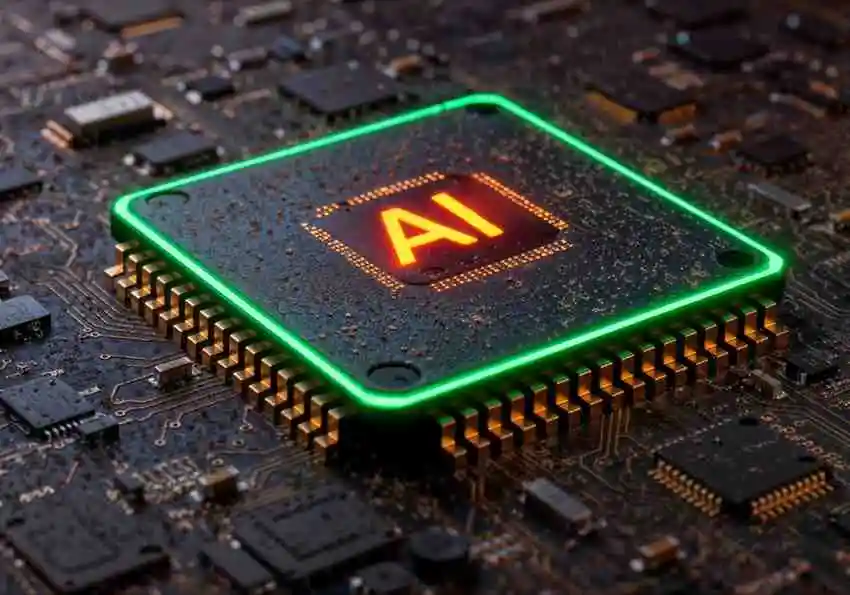
A New Challenger in XR: GravityXR AI Chip Enters the Arena
The GravityXR AI chip is making headlines as former Apple engineer Wang Chaohao steps into the spotlight with his new startup in China. His company, GravityXR, aims to reshape the extended reality market with a high-performance mixed-reality processor designed to compete directly with Apple’s celebrated Vision Pro. This bold move reflects a growing wave of innovation in China’s XR sector, where companies work to match or outperform Western technology.
Jizhi G-X100: Built for Speed and Real-World Immersion
The highlight of GravityXR’s announcement is the Jizhi G-X100, a compact and powerful chip created for next-generation smart glasses and mixed-reality headsets. Its most impressive feature is its 9-millisecond photon-to-photon latency, which outperforms the Vision Pro’s 12-millisecond benchmark. This boost in speed offers smoother visuals and a more natural interactive experience, which are crucial for advanced spatial computing.
The chip uses advanced 5nm technology, allowing it to deliver high processing power without draining energy. This balance makes it suitable for lightweight AI glasses as well as full-featured XR headsets, giving hardware makers more flexibility. As users demand slimmer, faster devices, GravityXR positions itself as a strong competitor in the global XR race.

A Strategic Shift in Tech Innovation
Wang Chaohao’s move from Apple to launching GravityXR marks an important shift. His background in Apple’s extended reality division and his academic work at Stanford give the startup solid technical leadership. Instead of following Apple’s pace, GravityXR aims to set its own path by developing solutions tailored to both Chinese and international XR ecosystems.
The company has already attracted support from major investors such as HongShan and gaming giant miHoYo. Their backing shows strong confidence in GravityXR’s potential to become a key player in spatial computing. This momentum also mirrors a broader goal in China’s tech industry: building competitive hardware that reduces reliance on foreign technology.
Why This Chip Matters for the Future of XR
As XR moves closer to mainstream adoption, performance and speed matter more than ever. The GravityXR AI chip gives the market a new, powerful option. If the Jizhi G-X100 delivers on its promises, it could challenge Apple’s Vision Pro and speed up innovation across the entire industry.
With rising global interest in AI wearables and spatial computing, GravityXR’s entry could spark a new phase of competition—one that benefits developers, device makers, and consumers.