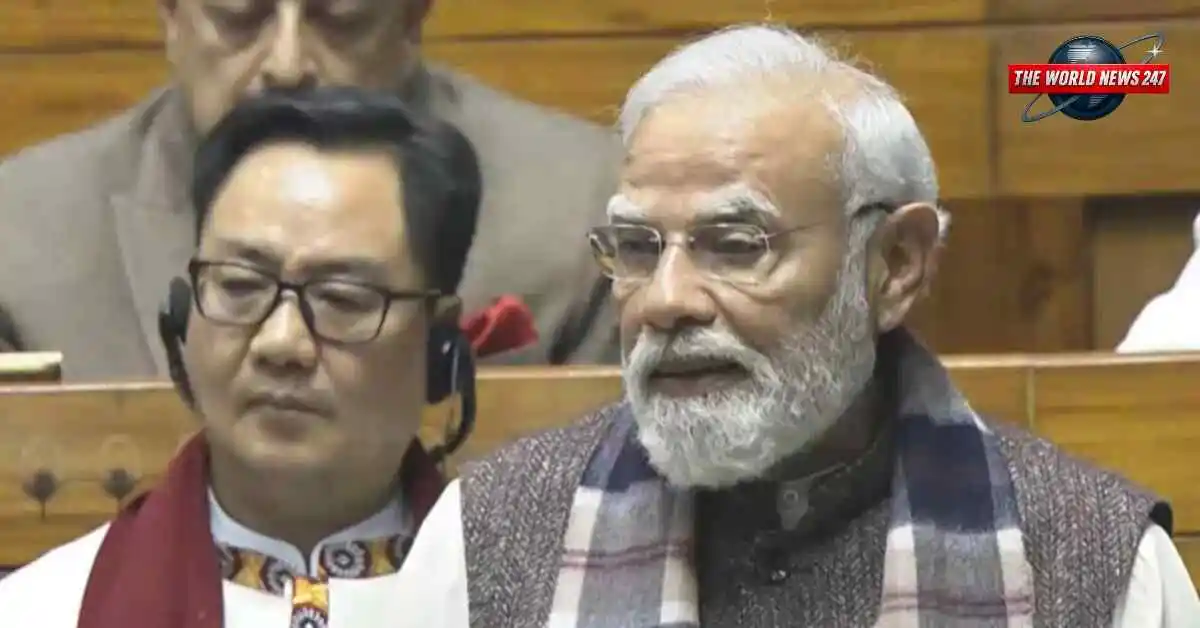
In a passionate speech in the Lok Sabha, Prime Minister Narendra Modi commemorated 150 years of the iconic national song Vande Mataram. The PM highlighted the ideological importance of the song in India’s freedom struggle and criticized the Congress Party for what he termed its “appeasement politics” during the Partition and its surrender to the demands of the Muslim League. Modi also emphasized the song’s significance in reviving India’s glorious past, positioning it as a symbol of national pride and unity. In his address, he referenced the contributions of Bankim Chandra Chattopadhyay and the historical importance of Vande Mataram as a rallying cry for independence. From calling out past mistakes to linking the national song with India’s cultural resurgence, the PM’s words resonated with those advocating for a self-reliant and proud India.
Key Points from PM Modi’s Speech on Vande Mataram
Modi’s Ideological Stance and Historical Relevance
Prime Minister Narendra Modi’s speech on the 150th anniversary of Vande Mataram was not just a tribute to the iconic song, but a call to bring back the ideological strength it represents. He drew attention to the song’s central role in India’s freedom movement and how it stood as a beacon of defiance against British rule. By celebrating the song’s roots, Modi highlighted its connection to the idea of India’s “glorious past,” aligning with the broader vision of the Sangh Parivar’s cultural and nationalistic agenda.
Attacking Congress’s “Appeasement Politics”
In his speech, the PM directly accused the Congress party of compromising with Muslim League demands during the pre-Independence era. Modi referred to the Congress’s decision to sideline Vande Mataram under the pressure of Muslim separatist demands, claiming that the party’s actions contributed to the partition of India in 1947. His characterization of Congress as the “Muslim League-Maoist Congress” (MMC) underscored his belief that Congress’s appeasement of Muslim separatists was detrimental to India’s unity.

Vande Mataram as a Symbol of National Unity and Independence
Modi reminded the Lok Sabha of the deep cultural significance of Vande Mataram, a song that Bankim Chandra Chattopadhyay wrote to inspire and rally the masses during British rule. He spoke of the song as a symbol of India’s inherent strength, nationalism, and the sacrifices made by countless Indians during the freedom struggle. The PM also referenced Mahatma Gandhi’s admiration for the song, adding that Gandhi viewed it as a “national anthem” long before Jana Gana Mana was adopted. According to Modi, Vande Mataram represents a timeless call for national unity and self-reliance—an idea that must be passed on to future generations.
The Path Forward: A Vision for 2047
Closing his speech, Modi called for unity in embracing the core values represented by Vande Mataram to build a self-reliant and developed India by 2047. Linking the song to India’s enduring spirit, he urged lawmakers to remember the sacrifices of the past while striving for a prosperous future. This vision reflects Modi’s broader agenda of economic growth, national pride, and unity under a strong cultural identity.