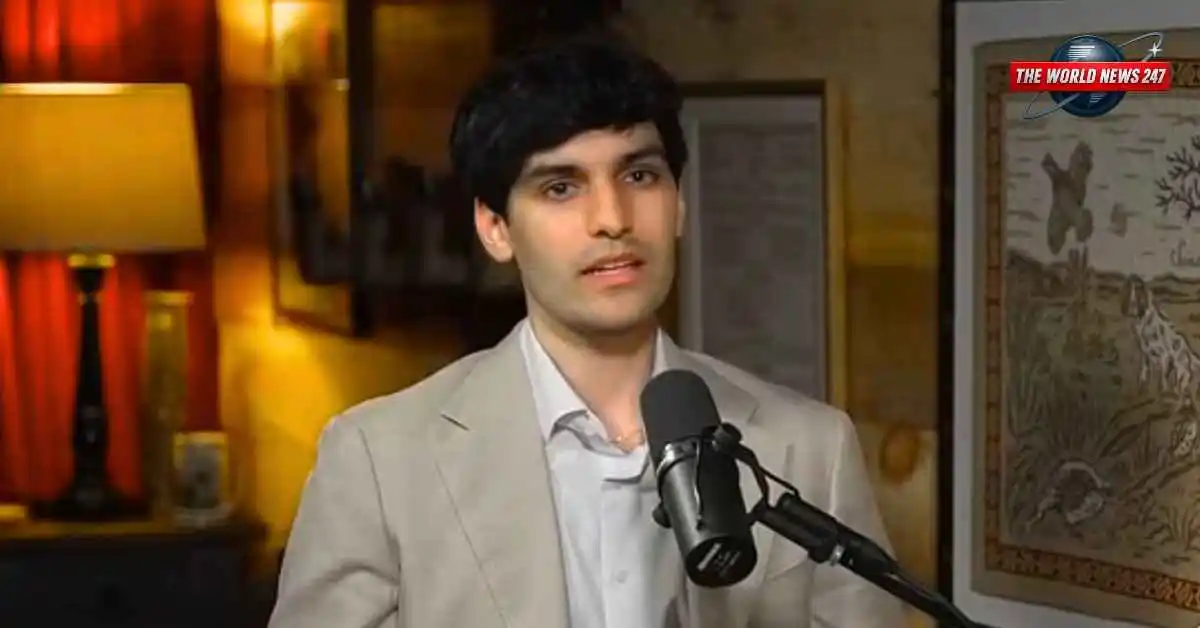
In a controversial interview, Nalin Haley, the son of former US Ambassador Nikki Haley, has sparked a debate over immigration and employment in the United States. Nalin, who is also a strong proponent of American loyalty, argues for the elimination of H-1B visas, citing the struggles faced by American graduates in finding jobs. His comments have reignited discussions on the balance between skilled foreign labor and domestic employment, particularly among the youth.
The Controversy Surrounding Nalin Haley’s H-1B Visa Remarks
In a recent Fox News interview, Nalin Haley, the 24-year-old son of former U.S. Ambassador Nikki Haley, voiced his strong opinion about foreign worker visas, particularly the H-1B visa program, which grants temporary work permits to highly skilled foreign workers. Nalin’s remarks have stirred up a significant amount of debate, especially given his Indian-American background, as many H-1B visa holders are from India.
A Call for Change: Ending H-1B Visas
Nalin Haley’s call for the end of the H-1B visa program has raised eyebrows, particularly among those who see the program as crucial for bringing in talent from around the world. However, Nalin argues that the increasing number of foreign workers entering the U.S. is putting American graduates at a disadvantage.
According to Nalin, many of his peers—graduates from top universities with impressive degrees—are struggling to find jobs. He claims that after graduating, a significant percentage of his friends remain unemployed, which he attributes to the influx of foreign workers filling positions that should ideally be available to American citizens.
In his interview, Nalin made it clear that his primary loyalty lies with the United States and its workforce. “My loyalty is to America,” he said. “We need to prioritize American workers, especially those burdened with student debt, who are unable to find employment despite their qualifications.”

The Unemployment Crisis: How H-1B Visas May Contribute
Nalin pointed to alarming statistics about the current state of the U.S. job market. He mentioned that nearly 58% of recent college graduates are unemployed or underemployed, and of those who have jobs, many are in temporary positions or roles that do not require a degree.
His argument centers on the idea that foreign workers, particularly those on H-1B visas, are taking up high-paying, skilled jobs that could otherwise be available to American graduates. He also emphasized the importance of assimilation into American culture, saying that immigrants should not only come to the U.S. for opportunities but should also align themselves with American values and contribute to the country’s workforce.
The Debate Over Immigration and Economic Priorities
Nalin Haley’s position on H-1B visas is not just a critique of the current immigration system but a broader statement on how the U.S. should prioritize its workers and economy. While his stance has garnered both support and criticism, it underscores an ongoing debate about the balance between attracting global talent and ensuring that American citizens, especially graduates, have access to job opportunities.
Critics of Nalin’s views argue that the H-1B program brings necessary expertise to the U.S. and helps fill critical skill gaps in industries like technology and healthcare. They also point out that many H-1B visa holders contribute significantly to innovation and economic growth in the U.S.
Conclusion: A Divisive Issue
The discussion around H-1B visas and American unemployment is not new, but Nalin Haley’s personal connection to the issue and his blunt remarks have given the debate new life. Whether his stance will influence policy remains to be seen, but it has certainly brought attention to the challenges faced by American graduates in an increasingly competitive job market.
As this issue evolves, the question of how to balance immigration with the needs of American workers will remain at the forefront of discussions on U.S. labor policy.