As the war in Ukraine grinds through another harsh winter, tensions between Russia and the West have sharpened once again. Russian President Vladimir Putin has pushed back strongly against Western warnings of a broader conflict, while European Union leaders remain divided over a controversial proposal to use frozen Russian assets to support Ukraine financially and militarily.
Putin Rejects Claims of Wider War
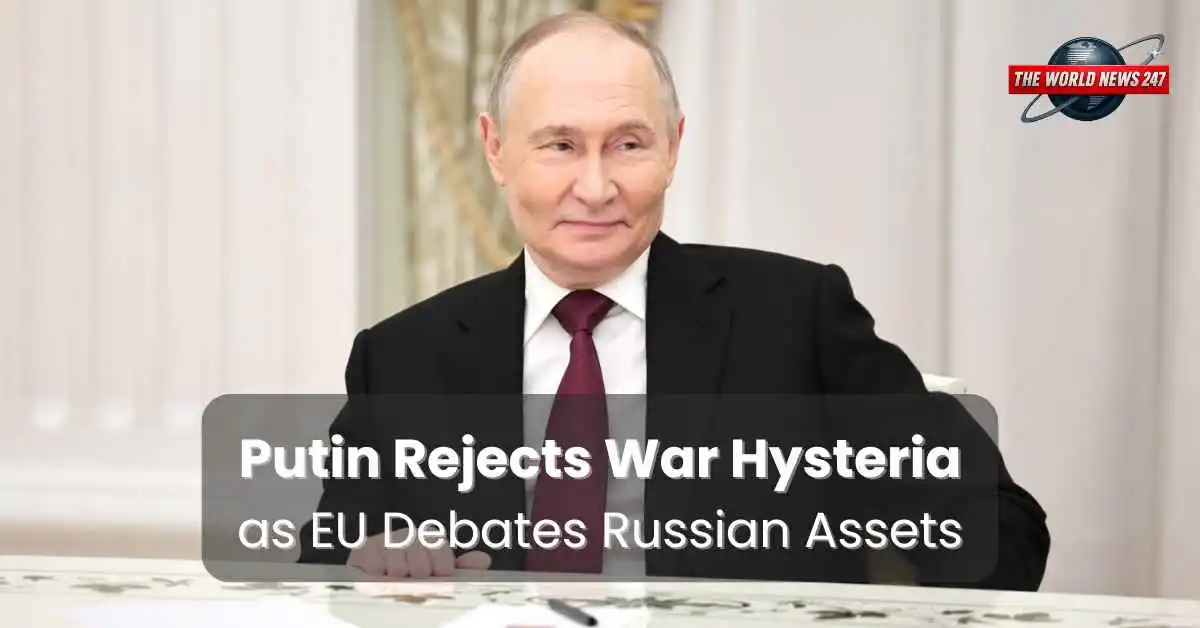
Speaking at a high-level meeting with defence officials, President Putin accused Western governments of fuelling unnecessary fear by suggesting preparations for a direct conflict with Russia. He dismissed such narratives as exaggerated and politically motivated, insisting that Moscow has no interest in a war with the West.
At the same time, Putin made it clear that Russia will not back down from its objectives in Ukraine. He reiterated that Moscow believes its goals can be achieved and said Russia remains ready to pursue them through force if diplomatic efforts fail. While emphasising that dialogue remains preferable, the Kremlin continues to frame the conflict as one rooted in unresolved political and security issues.
EU Split Over Seizing Russian Funds
Putin’s remarks came as European leaders prepared for a crucial summit focused on Ukraine’s future funding. At the centre of discussions is the fate of more than €200 billion in Russian central bank assets currently frozen across Europe.
Several EU officials argue that these funds could help finance Ukraine’s defence and reconstruction needs over the coming years. The European Commission has stressed the urgency of securing long-term financial backing for Kyiv, particularly as the war shows no sign of ending soon.
However, the proposal has exposed deep divisions within the bloc. Countries including Belgium and Italy have voiced strong reservations, warning that seizing sovereign assets could face serious legal challenges. There are also concerns that such a move could damage investor confidence in European financial markets and provoke retaliatory measures from Moscow.

Legal and Political Hurdles Remain
Italian Prime Minister Giorgia Meloni acknowledged progress in diplomatic discussions with key partners but admitted that finding a legally sound method to use Russian assets remains difficult. Several member states insist that any decision must rest on a solid legal foundation to avoid long-term consequences for the EU’s credibility.
Meanwhile, European Council leaders have signalled they are willing to prolong negotiations to reach consensus, highlighting how high the stakes have become for Europe’s Ukraine policy.
Developments Beyond the EU
Outside the EU, the United Kingdom has taken steps to channel funds linked to sanctioned Russian individuals toward humanitarian aid for Ukraine. The move underscores how Western countries continue to explore alternative funding routes amid legal and political constraints.
On the battlefield, fighting remains intense, with both Russia and Ukraine reporting gains and losses in contested regions. Recent weeks have also seen increased strikes on energy infrastructure, raising fears of further hardship for civilians on both sides.
A Critical Moment Ahead
As diplomatic tensions rise and financial decisions loom, the debate over Russian assets highlights the broader struggle between legal norms, economic risks, and the urgent need to support Ukraine. The coming days may prove pivotal in shaping Europe’s strategy as the conflict enters yet another uncertain phase.