Lavrov Missing from Key Security Council Meeting
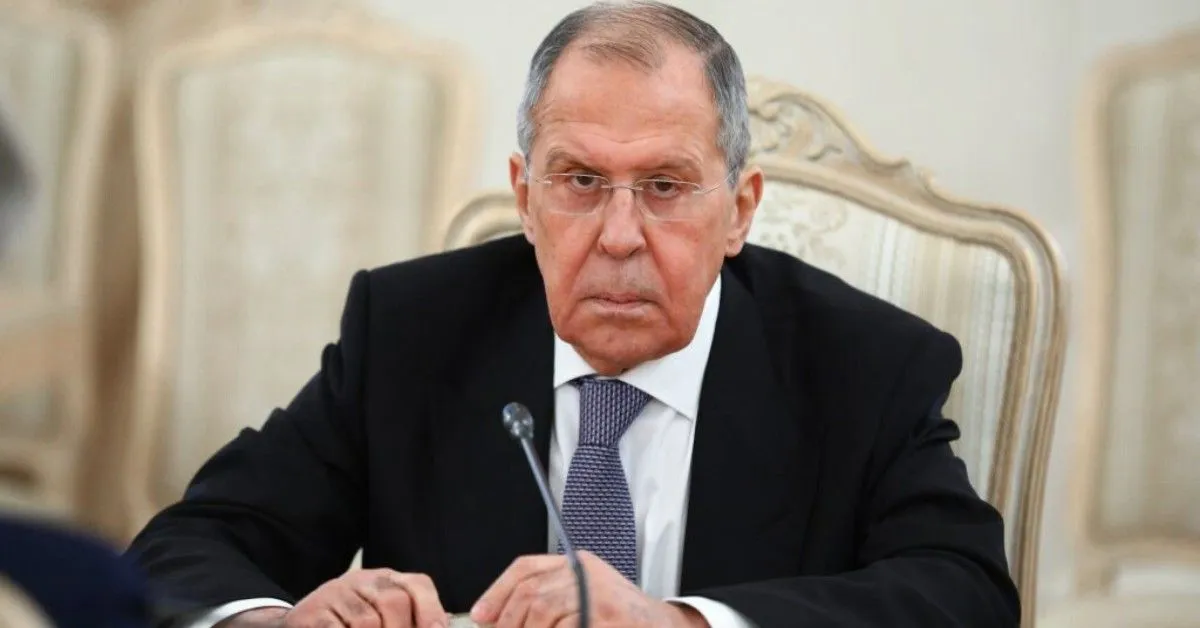
The Sergey Lavrov absence from a recent Russian Security Council meeting has stirred widespread speculation in Moscow and beyond. Foreign Minister Sergey Lavrov, Russia’s top diplomat for over two decades, was notably missing when President Vladimir Putin met with key officials to discuss the possibility of resuming full-scale nuclear testing.
Kremlin spokesperson Dmitry Peskov quickly dismissed rumors of a political shakeup. Speaking to reporters, Peskov clarified, “There is no truth to these reports whatsoever. Lavrov continues to serve as foreign minister, of course.” His statement came after several Russian outlets hinted at internal discord within the upper ranks of the Kremlin’s foreign policy establishment.
Media Reports Trigger Kremlinology Buzz
The initial spark came from a Kommersant report that cited “informed sources,” claiming Lavrov was “absent by agreement.” Observers, however, found the explanation unconvincing. Lavrov’s no-show marked him as the only permanent member of the Security Council not present at the meeting.
Adding fuel to the fire, Putin recently signed a decree assigning Deputy Chief of Staff Maxim Oreshkin to lead the Russian delegation at the upcoming G20 Summit in Johannesburg, a role traditionally held by Lavrov. The timing of both developments led analysts to question whether the foreign minister had fallen out of favor or was facing a quiet demotion.
While Kremlin officials have rejected such claims, Moscow insiders say Lavrov’s absence from key meetings often signals internal debates or a realignment within the ruling elite.
Setback in US-Russia Diplomacy Adds to the Mystery
The intrigue around the Sergey Lavrov absence deepened after the collapse of a planned Putin-Trump summit in Budapest. Lavrov was leading negotiations for that high-profile meeting. However, following a tense phone call between Lavrov and US Secretary of State Marco Rubio, Washington shelved the plan.
US officials said Moscow had refused to soften its stance on Ukraine, prompting the Trump administration to impose fresh sanctions on Russia. Analysts in Moscow view this diplomatic setback as one of Lavrov’s rare missteps in recent years. Some believe it may have temporarily strained his standing within the Kremlin.
Nonetheless, Russia’s Foreign Ministry spokesperson Maria Zakharova maintained that Lavrov remains active in his role. “He continues to serve as foreign minister. His absence from the session is not unusual—it happens,” Zakharova told.

Lavrov’s Legacy in Russian Diplomacy
For over twenty years, Sergey Lavrov has been the face of Russian foreign policy. Before becoming foreign minister in 2004, he served as Russia’s ambassador to the United Nations, where he developed a reputation for sharp wit and uncompromising rhetoric.
Lavrov played key roles in defending the Kremlin’s stance during major international crises—from the 2008 war with Georgia and the 2014 annexation of Crimea to Russia’s involvement in the Syrian conflict and the 2022 invasion of Ukraine. His style often mirrors Putin’s—assertive, defiant, and unapologetically nationalist.
At a summit in Anchorage, Alaska, Lavrov drew global attention when he wore a sweater emblazoned with “CCCP,” the Soviet Union’s Cyrillic initials. The gesture, viewed as political theater, highlighted his willingness to blend nostalgia with provocation.
Signs of Continuity Despite Speculation
Despite the rumors, analysts caution against assuming a sudden fall from grace. Under Putin, loyalty and continuity often outweigh performance when it comes to senior appointments. The case of Sergei Shoigu, Russia’s long-serving defense minister, is a recent example. Shoigu was reassigned rather than dismissed after facing criticism over battlefield results.
Experts suggest that Lavrov’s long tenure and deep institutional ties make his immediate removal unlikely. “Lavrov remains indispensable in balancing Russia’s global posture,” one Moscow-based analyst said. “He’s too experienced and too loyal to be sidelined overnight.”
Still, the combination of his absence, the delegation reshuffle, and the failed summit has led many to see hints of shifting dynamics in Moscow’s foreign policy machine.
A Moment of Transition in Russian Diplomacy
The Sergey Lavrov absence may symbolize more than a scheduling issue—it could reflect the Kremlin’s efforts to recalibrate its diplomatic strategy amid growing international isolation. With Moscow under intense Western sanctions and global trust eroding, Russia’s foreign policy apparatus faces unprecedented pressure.
If Putin seeks new voices or fresh approaches, even a veteran like Lavrov might find himself navigating uncertain terrain. Yet for now, official denials from the Kremlin suggest stability at the top—at least in public view.