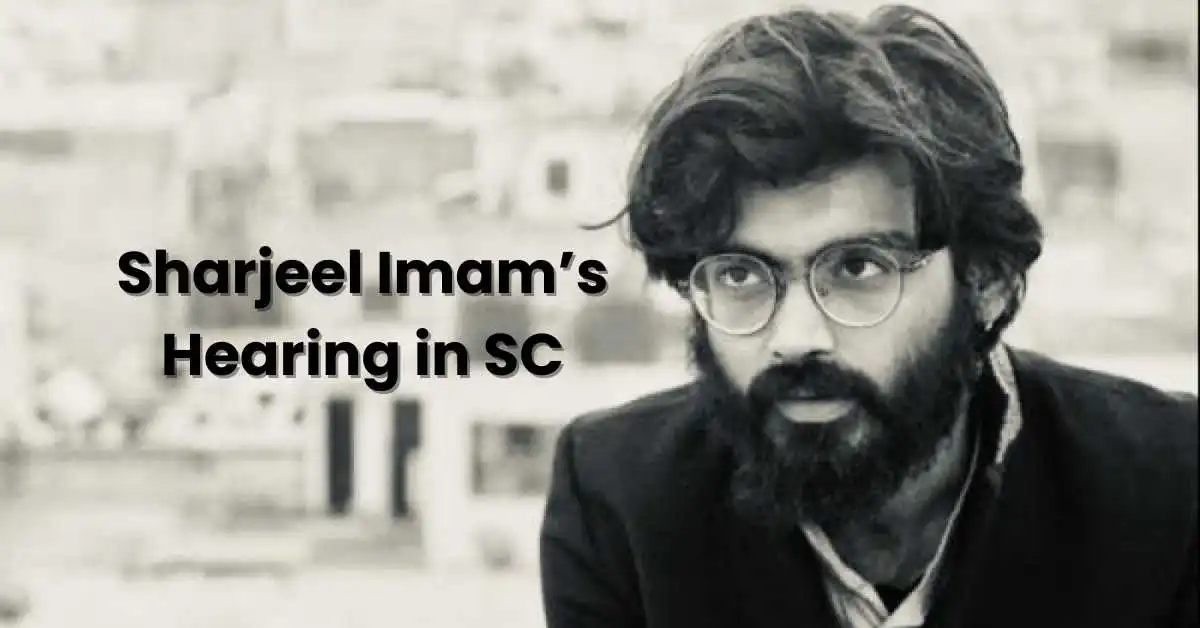
In Sharjeel Imam’s hearing in the Supreme Court, Delhi Police has strongly opposed his bail plea, presenting videos of his inflammatory speeches as part of their argument. Imam, who has been in jail since 2020, faces multiple serious charges, including sedition and violations of the Unlawful Activities (Prevention) Act (UAPA). His case has gained national attention, raising concerns about the balance between free speech and national security.
The Delhi Police claims that Imam’s speeches, made during the protests against the Citizenship Amendment Act (CAA) in 2019 and 2020, incited violence and sought to destabilize India’s territorial integrity. Imam’s lawyers, however, argue that his comments were misinterpreted and taken out of context. The outcome of this case could set a major precedent for how sedition laws are applied in India.
The Key Video Evidence in Sharjeel Imam’s Hearing in SC
During the hearing, Delhi Police presented video evidence to support their claim that Imam’s speeches were inflammatory. One video, recorded in Aligarh on January 16, 2020, allegedly shows Imam calling for the severing of Assam from India by blocking the strategic “chicken neck” region. Imam’s remarks, according to the police, encouraged separatism and violence.
In the video, Imam reportedly stated that a group of 5 lakh people could block the land corridor that connects Assam to the rest of India, effectively isolating the state. The police argue that such statements, made during highly charged protests, were intended to incite unrest and endanger national security.
ASG SV Raju, representing Delhi Police, pointed out that Imam’s influence over young people could have far-reaching consequences, making his speeches a serious threat. Imam’s defense team countered that he was merely expressing his views in a political context, and the speech should not be viewed as a call for violence.
Sharjeel Imam’s Bail Plea: Legal Arguments and Next Steps
Sharjeel Imam, along with co-accused Umar Khalid, has filed a petition in the Supreme Court, challenging the Delhi High Court’s denial of their bail plea. The activists argue that they are being unfairly targeted and that their right to protest peacefully has been violated. They also claim that the charges against them are politically motivated.
Despite these claims, Delhi Police maintains that Imam and his co-accused have played a significant role in inciting the violence that erupted during the 2020 Delhi riots. The police argue that these individuals posed a clear threat to national security and public order.

The hearing is ongoing, with the Supreme Court bench, comprising Justices Aravind Kumar and NV Anjaria, set to continue deliberating the matter. The outcome of this case could have lasting implications for India’s laws on sedition and freedom of expression.
Impact of Sharjeel Imam’s Hearing in SC on Sedition Laws and Free Speech
Sharjeel Imam’s case highlights the ongoing debate about the use of sedition laws in India. Critics argue that these laws are often misused to suppress dissent, particularly when the government disagrees with a public protest. Supporters of sedition laws, however, claim that they are essential to protect national security and public order.
The Supreme Court’s decision in this case could be crucial in determining how sedition laws are applied in the future. If the court grants bail, it may signal a shift in the way courts interpret sedition charges. Conversely, if the court denies the bail plea, it may reinforce the government’s stance on limiting public dissent under the guise of national security.
Conclusion: The Future of Sedition Laws in India
The ongoing legal battle in Sharjeel Imam’s hearing in the Supreme Court is part of a larger conversation about the boundaries of free speech in India. As political protests become more vocal, the country faces a critical decision about how to balance national security concerns with the right to express dissent.
The verdict could shape the future of sedition laws in India, determining whether they will be used to curb political protest or whether the rights of activists like Imam and his co-accused will be upheld.