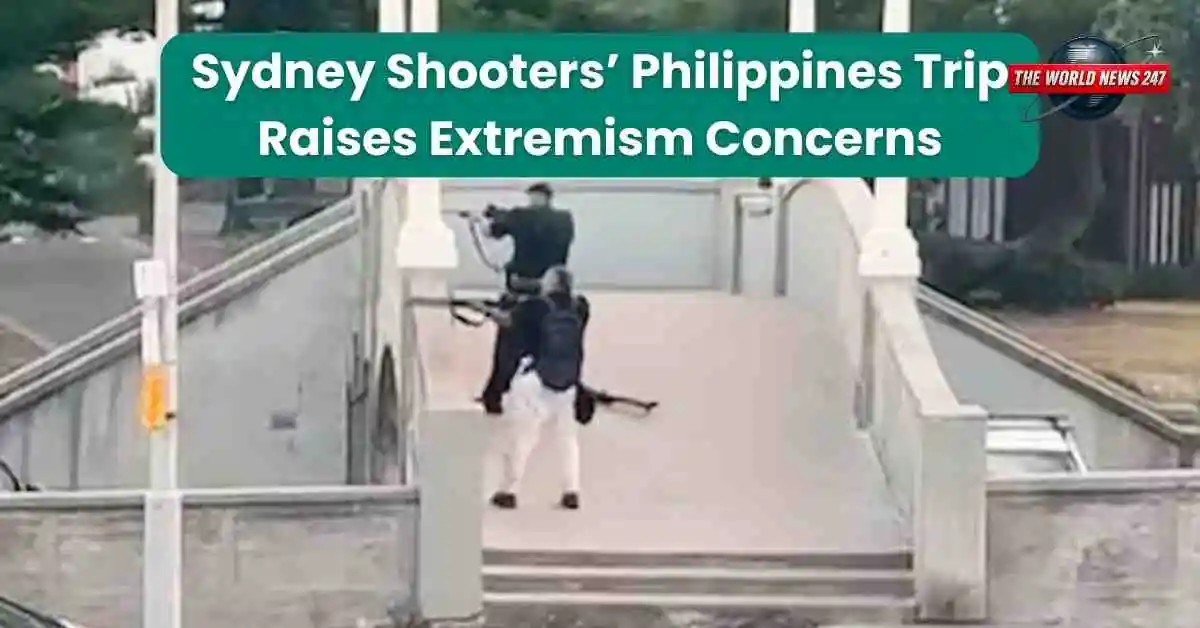
The revelation that suspects connected to the deadly Sydney shooting spent nearly a month in the Philippines has renewed global concern about the evolving nature of extremist networks in Southeast Asia. Although large-scale militant control has faded in the region, recent disclosures show how extremist ideology continues to move quietly across borders, raising alarms for regional and international security agencies.
What Authorities Have Confirmed So Far
Australian and Philippine authorities have confirmed that two individuals later linked to the Sydney attack traveled to the Philippines for approximately 28 days before returning to Australia. Immigration records show the pair entered the country together in early November and departed toward the end of the month.
During their stay, officials confirmed travel to Davao City in southern Mindanao. However, authorities have not released details about other destinations, contacts, or activities. As a result, investigators continue to examine whether the visit had any direct operational purpose or ideological influence.
Why Davao and Mindanao Matter
Davao City sits in Mindanao, a region shaped by decades of separatist conflict and militant activity. While the city itself functions as a major urban center, its proximity to areas historically linked to extremist groups makes any unexplained travel there significant.
Mindanao has long served as a focal point for armed movements seeking autonomy or ideological dominance. Although government forces dismantled major militant strongholds years ago, security experts note that smaller, fragmented cells remain active. These groups no longer hold territory but continue to recruit, communicate, and inspire violence.
The Lingering Impact of Marawi
The 2017 siege of Marawi marked a turning point for extremist activity in the Philippines. Fighters aligned with the so-called Islamic State briefly seized parts of the city, triggering months of intense urban combat. While the government ultimately regained control, the conflict displaced hundreds of thousands and left lasting scars.

Since then, extremist networks have shifted tactics. Instead of territorial control, they now focus on ideology, online radicalisation, and transnational connections. Analysts warn that such movements often rely on short-term travel and discreet meetings rather than visible operations.
A Broader Security Concern
The Sydney case highlights how extremist inspiration can cross borders without direct battlefield involvement. Even brief overseas trips can play a role in reinforcing ideology or building connections. Consequently, authorities now face the challenge of tracking fragmented networks that operate below the radar.
As investigations continue, the focus remains on understanding whether the Philippines trip contributed to radicalisation or planning. Ultimately, the case underscores a sobering reality: while major extremist strongholds may fall, the ideology behind them continues to adapt and spread in quieter, harder-to-detect ways.