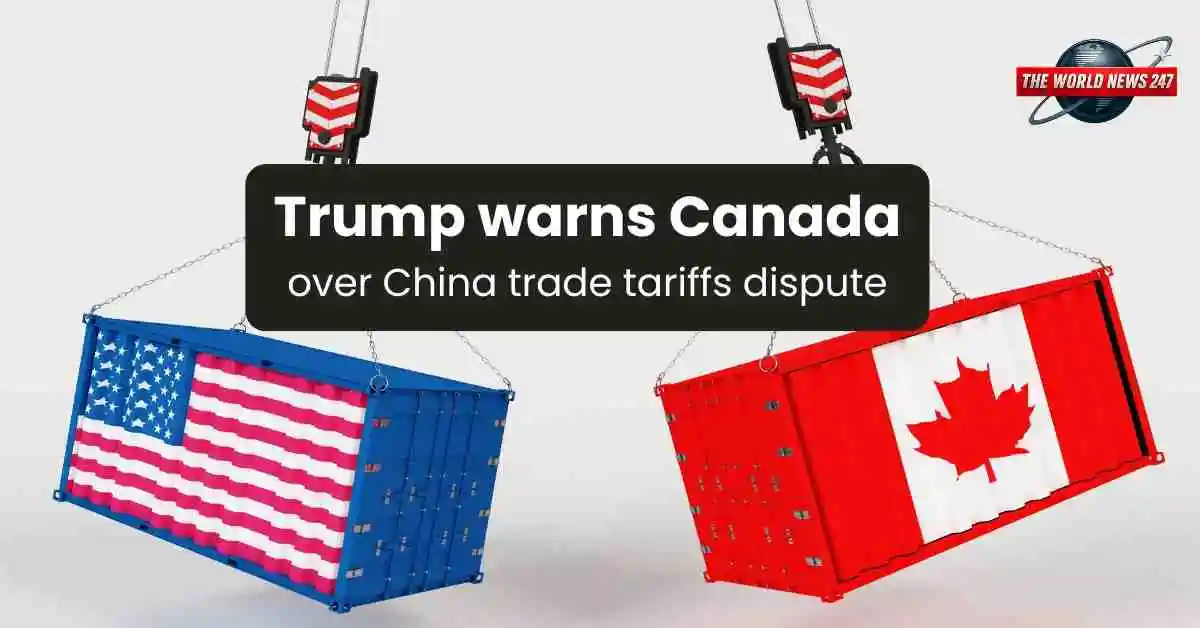
U.S. President Donald Trump has reignited global trade tensions by warning Canada of potential 100% tariffs in response to its expanding trade relationship with China. The statement has triggered fresh debate across North America about economic sovereignty, supply chains, and the future of regional trade partnerships.
As businesses and policymakers assess the implications, the warning underscores how trade with China continues to be a flashpoint in U.S. foreign and economic policy—especially when close allies are involved.
Why Trump Is Targeting Canada’s China Trade
At the center of the dispute is Canada’s growing commercial engagement with China in key sectors such as manufacturing, energy resources, and technology. Trump has long argued that trade deals involving China can undermine U.S. economic interests, particularly when they affect North American supply chains.
By threatening steep tariffs, Trump is signaling that closer Canada–China ties could come at a high cost. The message aligns with his long-standing “America First” trade philosophy, which prioritizes domestic production and pressures allies to limit economic dependence on Beijing.
Potential Impact of 100% Tariffs
A tariff at this scale would significantly disrupt cross-border trade between the U.S. and Canada—one of the world’s largest bilateral trading relationships. Key industries such as automotive manufacturing, agriculture, steel, and consumer goods could face higher costs, reduced exports, and supply chain delays.
For Canadian exporters, losing price competitiveness in the U.S. market would be a major blow. On the American side, consumers and manufacturers could see higher prices and limited access to critical inputs, raising inflation concerns.
Canada’s Strategic Dilemma
Canada now finds itself balancing economic diversification with geopolitical realities. While expanding trade with China offers access to a massive market, the U.S. remains Canada’s most important trading partner by a wide margin.
Analysts suggest Ottawa may respond with diplomatic engagement rather than confrontation, aiming to reassure Washington while maintaining its independent trade strategy. Any escalation, however, could strain relations and revive memories of earlier tariff battles.
What This Means for Global Trade
Trump’s warning highlights a broader trend toward protectionism and strategic trade alliances. As global economies fragment into competing blocs, trade policy is increasingly shaped by politics rather than purely economic considerations.
Whether the tariff threat becomes policy or remains a negotiating tactic, it sends a clear signal: trade with China continues to carry political consequences—especially for U.S. allies.