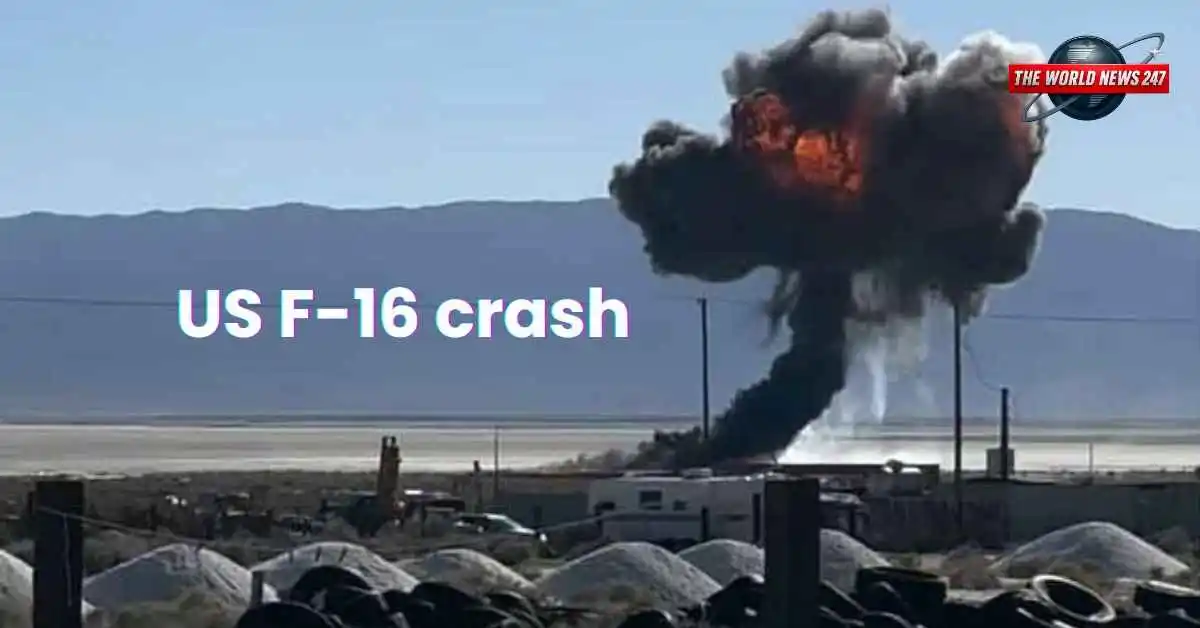
The US F-16 crash in the Mojave Desert drew national attention after the fighter jet exploded on impact during a training mission. The Air Force confirmed that the pilot ejected moments before the jet hit the ground. As a result, the incident ended without any loss of life, although the aircraft was destroyed.
According to officials, the crash took place around mid-morning near Trona, a remote community north of Los Angeles. The Thunderbirds, the Air Force’s elite demonstration team, operated the aircraft during a scheduled practice flight. The team trains at high speeds and low margins of error, which often increases the risk during complex maneuvers.
Thunderbirds Training Session Ends Abruptly
The US F-16 crash stunned thousands online after a video surfaced showing the pilot ejecting as the jet drifted downward. Moments later, the aircraft burst into flames. The footage spread quickly, and many viewers praised the pilot’s quick reaction.
Emergency crews from San Bernardino County reached the scene within minutes. They transported the pilot to a nearby hospital, where doctors treated him for minor injuries. Fortunately, his condition remained stable.
What Investigators Plan to Examine
Because the Thunderbirds operate older, high-performance jets, investigators will now study several factors. They will review mechanical systems, weather conditions, and the jet’s recent maintenance history. Moreover, they will analyze cockpit recordings to understand the final seconds before the impact. The Air Force stated that the findings will help improve operational safety during future training missions.

Thunderbirds’ Long Legacy and High-Risk Missions
The Thunderbirds have performed precision aerobatic shows since 1953. Their pilots fly within inches of one another during exhibitions, which demands intense discipline and continuous practice. Therefore, every training mission carries higher stakes than standard flights.
Despite the crash, the Air Force emphasized that demonstration training will continue. Safety evaluations will run alongside routine operations to ensure that pilots stay prepared for upcoming shows.
Conclusion
The US F-16 crash highlighted both the risks of advanced aerial training and the effectiveness of emergency systems that saved the pilot’s life. As investigations move forward, the Air Force aims to learn from the incident and strengthen future flight safety protocols.