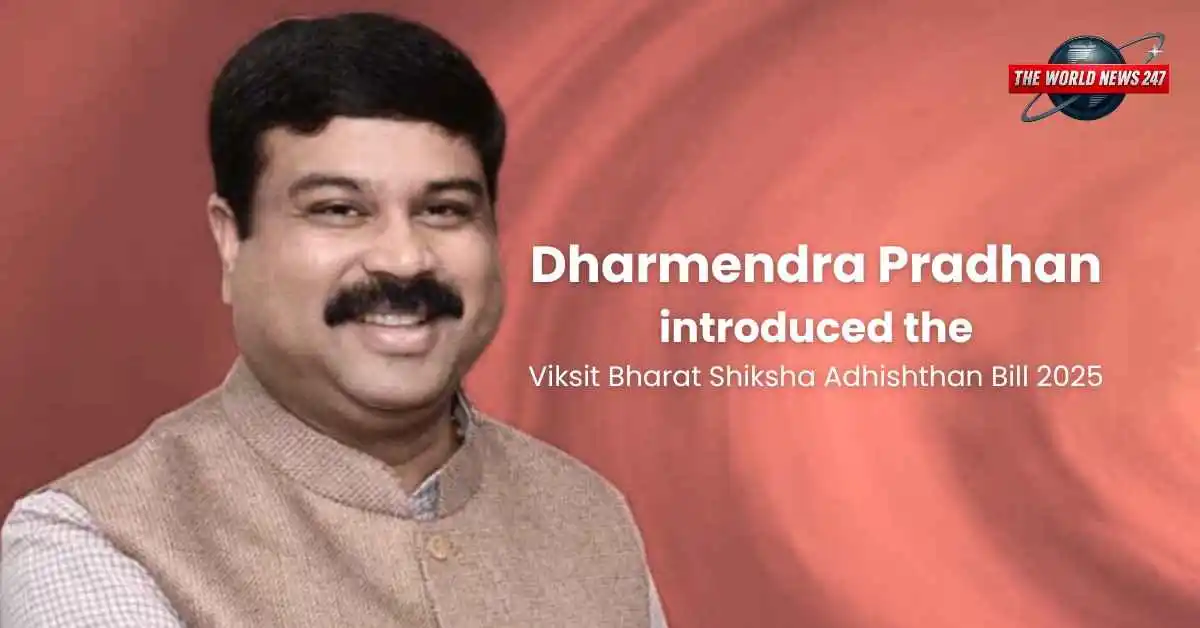
Union Education Minister Dharmendra Pradhan introduced the Viksit Bharat Shiksha Adhishthan Bill, 2025 in the Lok Sabha on Monday, sparking heated debates and opposition objections. The bill aims to establish a new regulatory framework for India’s higher education system by creating a unified commission to replace several existing bodies. The legislation proposes the creation of a three-council commission responsible for accreditation, academic standards, and autonomy for institutions. However, opposition parties have raised concerns over the bill’s constitutional implications, centralization of power, and the lack of time for MPs to study its provisions.
Key Highlights of the Viksit Bharat Shiksha Adhishthan Bill 2025
The Viksit Bharat Shiksha Adhishthan Bill is designed to replace the University Grants Commission (UGC), All India Council for Technical Education (AICTE), and National Council for Teacher Education (NCTE). Under the new framework, the bill proposes a three-council commission consisting of a Regulatory Council, Accreditation Council, and Standards Council. This body will oversee the accreditation process for higher education institutions, set academic standards, and grant autonomy to institutions based on their performance and compliance with regulations.
The bill also introduces stringent penalties for institutions that operate without government approval, including hefty fines of up to ₹2 crore for establishing universities without proper authorization. Additionally, institutions found in violation of the bill’s provisions could face fines ranging from ₹10 lakh to ₹75 lakh, depending on the severity of the infraction.
Opposition Concerns and Controversies

While the government believes that the bill will bring greater transparency, autonomy, and accountability to India’s higher education system, opposition MPs have raised several concerns. Congress MP Manish Tewari criticized the bill for centralizing control over higher education, undermining the autonomy of state-run universities, and potentially violating constitutional principles.
Members from southern states, including Kerala and Tamil Nadu, objected to the Sanskritized nomenclature of the bill, with some even calling it an imposition of Hindi. These MPs argue that the bill’s language and structure are indicative of the central government’s attempt to exert control over state governments and undermine the federal structure.
What’s Next?
Given the scale and implications of the bill, the government has agreed to refer it to a Joint Parliamentary Committee (JPC) for further deliberations. This move follows requests from MPs across party lines who expressed concerns about the bill’s extensive provisions and the lack of time to study it thoroughly.
As India moves towards a more centralized higher education regulatory framework, the coming weeks will see intense discussions around the bill’s potential impact on the autonomy of educational institutions and the balance of power between the Union and state governments.