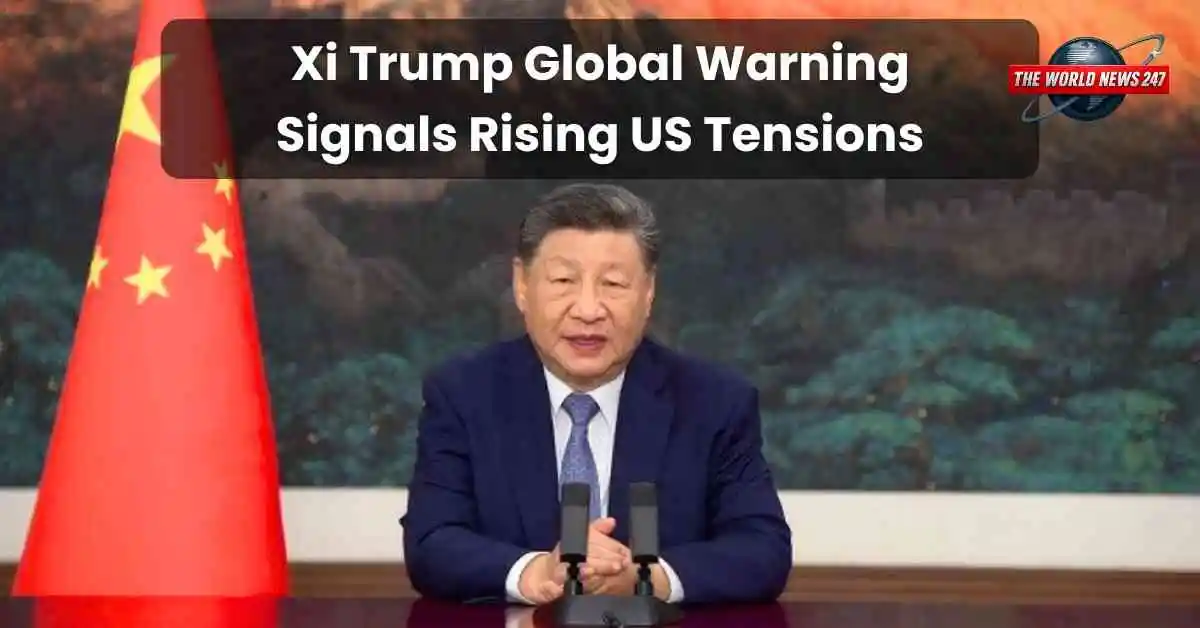
Xi Trump global warning became clear as Chinese President Xi Jinping and Iranian officials delivered strong messages aimed at Donald Trump in separate developments. Both signals reflect rising frustration with US pressure, technology restrictions, and political interference on the global stage.
Xi Trump Global Warning Emerges From Beijing
In his New Year address, Chinese President Xi Jinping sent a carefully framed message to both Washington and global technology firms. Without naming names directly, Xi emphasized China’s determination to strengthen technological self-reliance and protect national interests.
The comments carried significance for US chipmakers like Nvidia. China continues to face American export controls that restrict access to advanced semiconductor technology. Xi’s remarks highlighted China’s resolve to overcome barriers through domestic innovation and strategic partnerships.
The Xi Trump global warning also reflected Beijing’s broader stance against economic pressure. Xi urged stability, resilience, and long-term planning. Analysts view this as a response to US policies shaped during the Trump era and continued through later administrations.
Iran Issues Red Line Warning to Trump
At the same time, Iranian officials delivered a direct warning to Donald Trump over comments related to internal protests. Tehran accused the former US president of interfering in domestic affairs and attempting to inflame tensions.
Iranian leaders stated that public statements from foreign politicians cross a political red line. They stressed that protests remain an internal matter and rejected any form of external involvement.
This message reinforced Iran’s long-standing opposition to US influence. The Xi Trump global warning now appears echoed across regions, as nations push back against American political rhetoric.

Technology, Protests, and Power Politics
Both China and Iran framed their messages around sovereignty. China focused on technology and economic independence. Iran emphasized political autonomy and internal stability.
These developments highlight how US influence faces growing resistance. Countries affected by sanctions, export controls, or diplomatic pressure increasingly respond with public warnings.
Experts believe these signals could shape future global relations. The alignment in tone suggests a shared stance against perceived US dominance in political and economic affairs.
What This Means for Global Relations
The Xi Trump global warning reflects a shift toward firmer messaging from rival powers. While direct confrontation remains unlikely, rhetorical tensions continue to rise.
Observers expect these statements to influence trade negotiations, technology policy, and diplomatic engagement in the coming months.