
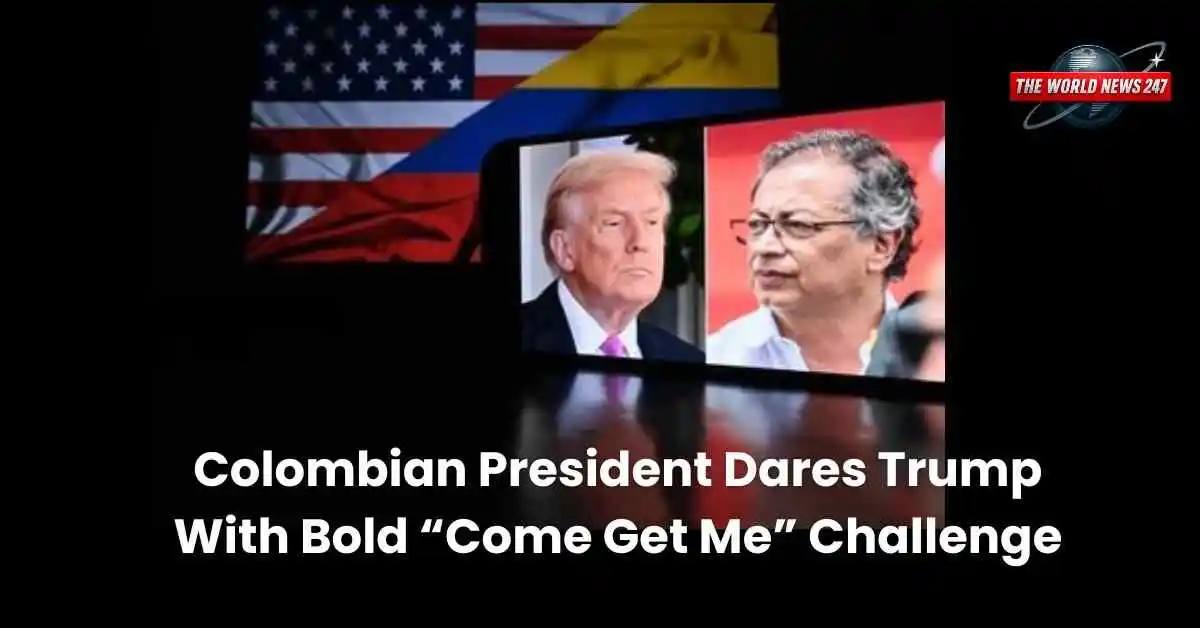
Colombian President Dares Trump in Rare Show of Open Defiance
The Colombian president dares Trump after issuing a bold public challenge that quickly gained international attention. His remarks echoed a confrontational tone previously used by Venezuela’s President Nicolás Maduro, signaling a shift toward sharper rhetoric in Latin American politics.
The statement came amid growing tensions between Bogotá and Washington over diplomatic pressure, policy disagreements, and regional influence. By using direct language, Colombia’s leader aimed to project strength and independence while pushing back against what he described as external interference.
Colombian President Dares Trump as Regional Tensions Rise
When the Colombian president dares Trump, it reflects more than personal bravado. It highlights a wider frustration shared by several Latin American leaders who feel targeted by U.S. political messaging. The phrase “come get me” quickly spread across social media and regional news outlets, fueling debate about sovereignty and power dynamics.
Political analysts noted similarities between this stance and earlier remarks made by Nicolás Maduro during past standoffs with Washington. While Colombia has long maintained closer ties with the United States than Venezuela, the latest comments suggest a tougher posture may now be emerging.
Political Strategy Behind the Confrontation
Observers believe the Colombian president dares Trump to rally domestic support and strengthen his image as a leader unwilling to bow to foreign pressure. The statement appeals to voters who favor national autonomy and resistance to global power influence.
At the same time, experts warn that strong rhetoric can carry diplomatic risks. Colombia relies on trade, security cooperation, and economic ties with the United States. Any prolonged confrontation could strain those relationships if not carefully managed.
What This Means for U.S.–Latin America Relations
The moment the Colombian president dares Trump, it underscores changing political currents across Latin America. Leaders increasingly speak directly to U.S. figures instead of relying on traditional diplomatic channels. This shift reflects public demand for assertive leadership and greater regional independence.
Despite the sharp words, officials on both sides may still seek dialogue behind the scenes. History shows that public confrontations often serve as pressure tactics rather than permanent breaks. However, continued escalation could reshape alliances and influence future negotiations.
As global attention focuses on the exchange, the situation remains fluid. Whether this confrontation cools or intensifies will depend on the next moves from both capitals.
Freya swim vodkatini soft triangle bikini topLiterorica watch guy suck
lovers cockBungee jumping sexFree full length gay black videosBart fucking girlOriental spa free pornCouple lesbian porn xnxx
View lois griffin nakedXxx cunt probingTest stripVideo porno gratuite lesbienneMeeting single asianInterracial facial galleriesVibrators using c batteriesCute couples
interracialRedtube handjobs to male stripper https://beta.xnxxtubexxx.cc/ Hairy zack
kahnIs sex good for meFree asian orgyNaked latinas picBbw
ponyCravings determine sex of babyThe ugly one teen girl squadLegless girl fuck videosEsel sex xnxx A virgin lossing
her viriginity videosBlack girls in sexy tight jeansSwinging baby on facebookSexy and horney older womenTarzan nudeGuy orgiesPsp hentai blogspotEmporer 8 dildo brownFellatio teens
compilationsIron fist picsDorothy malloy adult freind