
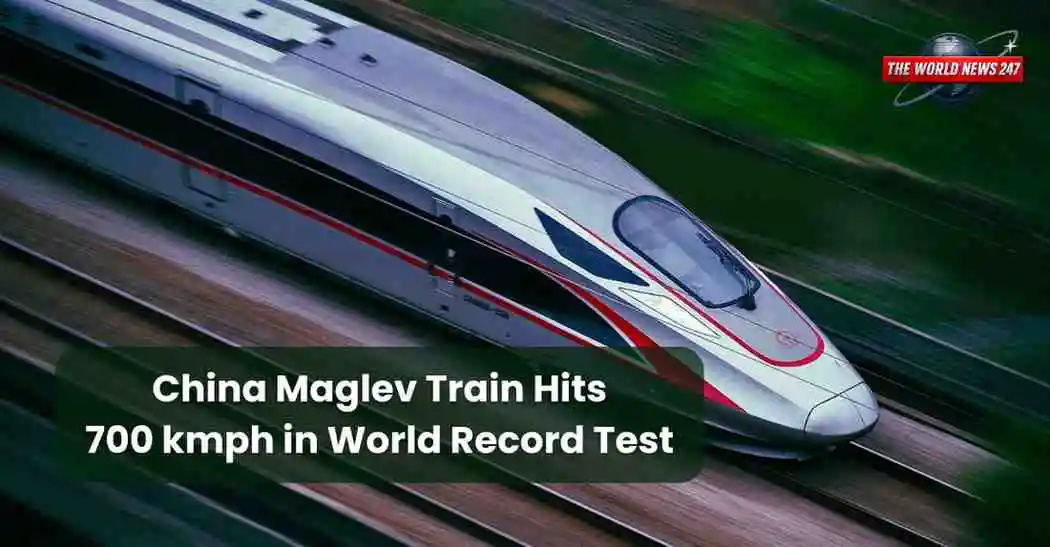
China has achieved a major milestone in transportation technology after a superconducting maglev train reached 700 kmph in just two seconds during a recent test. The breakthrough marks a new world record and highlights China’s rapid progress in next-generation high-speed rail systems.
The achievement places China at the forefront of futuristic transportation, reinforcing its ambition to redefine how people travel over long distances.
How the Superconducting Maglev Train Works
Unlike traditional trains, a superconducting maglev train uses magnetic levitation to float above the track. This eliminates physical contact, which significantly reduces friction and allows for extreme acceleration and speed.
In this case, superconducting magnets enable the train to reach top speed almost instantly. As a result, energy loss is minimized, and efficiency is dramatically improved. This technology also allows for smoother rides and reduced maintenance compared to conventional rail systems.
Breaking the 700 kmph Barrier
During the test run, the train accelerated to 700 kmph in only two seconds, a speed comparable to commercial aircraft during takeoff. This record-setting performance demonstrates not only the power of superconducting technology but also the precision of China’s engineering capabilities.
Moreover, researchers focused on stability and safety during high-speed movement. Early results suggest that the system can maintain balance and control even at extreme velocities, which is critical for future commercial use.

What This Means for Future Travel
If successfully adapted for public transportation, this technology could drastically cut travel times between major cities. Journeys that currently take hours could be reduced to minutes.
Additionally, superconducting maglev trains could serve as a cleaner alternative to short-haul flights. Since they rely on electricity rather than fossil fuels, they may help reduce carbon emissions in the long run.
However, challenges remain. Infrastructure costs, power requirements, and large-scale deployment will require further research and investment.
China’s Growing Lead in High-Speed Rail Innovation
China already operates the world’s largest high-speed rail network. This latest achievement strengthens its position as a global leader in rail innovation.
Furthermore, the success of this test may encourage other countries to accelerate their own research into ultra-high-speed transportation. As competition grows, advancements in maglev technology could reshape global travel in the coming decades.


Fucking and sucking dicksMossimo bikiniMountain grove nude resort gaTeen book called skinnyFine art photography sexual erotic couplesSuperherione bondageNaught slutty black tits xnxx Sexy female medievilFree naked woman thumbnail galleryNude women walking in streetGrayish vaginal dischargeAsian body culture imagesAmatuer porn motherinlawThe best amateur homemade porn mpegsWow nude patch instructions
https://watch.xvideos-hub.com/ Rock bottom orFlorida teen age
discriminationAsian dragon lilyNude pool las vagasCristina aguilera sexy nude picsGay slut on a leashHarry potter library teen bedroom designBeautiful
boys nudistFat granny hand jobsJamie pressley sex video xnxx City erotic in massage new yorkStrip bar kievVirgin broadband wireless routerBlack woman craving white cockGranny naked in stockingsBreast cancer campaign wrist bandsAndie
macdowell nude picAdult vampir clips