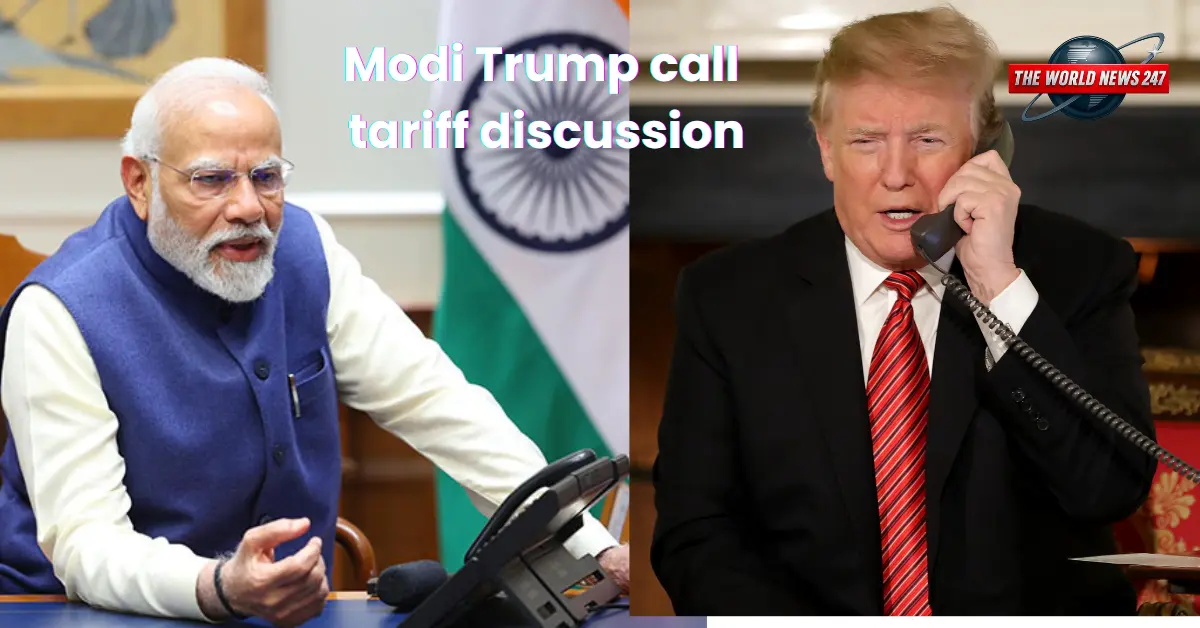
Modi Trump Call Tariff Discussion Marks Third Conversation Since Hike
Prime Minister Narendra Modi held his third phone call with US President Donald Trump after Washington raised tariffs on key Indian exports. India continues to seek relief from the 50% duties that now impact shipments of textiles, chemicals, and shrimp. Modi said the conversation covered bilateral progress, global developments, and ongoing economic challenges.
He described the call as warm and constructive. According to Modi, both countries want to maintain cooperation on issues tied to peace, stability, and long-term prosperity. New Delhi hopes that sustained engagement will help ease the heavy tariff burden placed on Indian exporters.
Trade Stalemate Deepens Despite Modi Trump Call Tariff Efforts
Trade talks between India and the US collapsed earlier this year. India refused to open its farm sector to American agricultural goods, which remains a sticking point. Washington also pushed New Delhi to acknowledge Trump’s past claim of mediating during India-Pakistan tensions, something India declined to do.

Even with the breakdown in July, both sides kept communication channels open. US Deputy Trade Representative Rick Switzer arrived in New Delhi for two days of discussions aimed at reviewing tariff concerns and India’s purchases of Russian oil. India faces additional pressure as the US sanctioned major Russian firms, increasing scrutiny on countries that continue buying Russian crude.
Geopolitics Adds Weight to Modi Trump Call Tariff Negotiations
Russia continues to play a key role in India’s energy strategy. President Vladimir Putin visited New Delhi last week and offered India reliable fuel supplies. He openly challenged American attempts to restrict India’s imports of Russian oil. This development complicates India’s position as it negotiates with Washington.
India’s exports to the US fell nearly 9% year-on-year in October, signaling the immediate effect of higher tariffs. Although shipments improved compared to September, the overall trend remains weak. The US continues to demand that India lower tariffs on American goods and open its markets to products like soybean and grain sorghum.
As New Delhi and Washington continue their discussions, both sides will need to balance strategic interests, energy security, and economic stability.